

A student can follow every step of a Physics explanation, nod with confidence and discover the next day that the idea has vanished. The problem is not necessarily poor memory. Often, the student recognised someone else’s reasoning but never had to reconstruct it.
Finding the Best Physics Tutor for a student therefore involves more than choosing the person who solves questions most impressively. A lasting explanation must expose the learner’s existing idea, connect it with evidence and representations, then survive an independent test in a changed context.
Explanation Begins Before the Tutor Speaks
Effective teaching starts by discovering what the student already believes. Without that step, a correct explanation may be placed on top of an incorrect mental model rather than replacing it.
Consider Newton’s third law. A student may believe that a moving lorry exerts a larger force on a car during a collision because the lorry is heavier. If the tutor simply states that the forces are equal and opposite, the student may reproduce the sentence while continuing to trust the original intuition.
A diagnostic question makes the conflict visible. The tutor can ask the student to predict the force readings from two connected sensors, justify the prediction and then examine the result. The explanation now addresses a specific misconception rather than an assumed blank slate.
Use the Predict, Observe, Explain Cycle
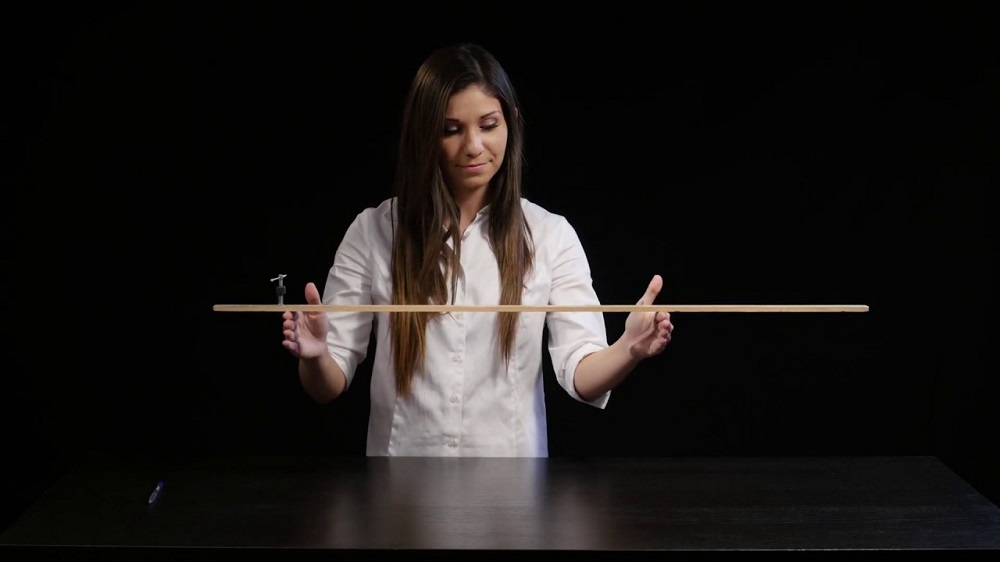
Demonstrations become powerful when students must think before and after them. Watching an interesting experiment is engaging, but engagement alone does not prove understanding.
In a predict, observe, explain cycle, the learner first commits to an outcome and reason. The demonstration then provides evidence. Finally, the student explains whether the evidence supports or challenges the original model.
This structure works with collisions, electromagnetic induction, pressure, thermal transfer, lenses and wave behaviour. The experiment gives an abstract principle something observable to explain.
The tutor should still connect the demonstration to the syllabus. Students need to know how the observed behaviour appears in a diagram, equation, graph or structured-response question.
Link Multiple Representations Deliberately
Physics is expressed through words, physical situations, diagrams, graphs and Mathematics. Many students understand one representation but cannot move reliably to another.
Take motion as an example. A student may describe an accelerating object correctly but misread the corresponding velocity-time graph. Another may calculate acceleration from a formula yet fail to recognise it as the gradient.
A strong explanation moves through the chain explicitly: describe the motion, sketch the graph, identify the gradient, attach the correct units and connect the result to the equation. The learner sees one physical relationship expressed in several forms.
This flexibility matters because examinations often change the representation. Understanding that depends on one familiar picture is fragile.
Control Complexity Without Removing the Physics
When several ideas appear at once, working memory can become overloaded. Good teaching reduces unnecessary complexity while preserving the reasoning students eventually need to perform.
A tutor might begin a force problem by defining the object under analysis and drawing only the relevant forces. Once that model is secure, components and equations can be added. The student is not given a shortcut. The problem is organised into meaningful decisions.
The support should then be reduced. If every future diagram is drawn by the tutor, the explanation has made the lesson easier but not the student more capable.
Explain Conditions, Not Just Formulas
Formula-first teaching encourages students to match visible numbers with memorised equations. It works on routine questions and breaks down when the context changes.
An equation should be taught with its physical meaning and conditions. Conservation of momentum, for example, depends on the system and the treatment of external forces. Energy conservation does not mean every named form of energy remains constant individually.
When students understand conditions, they can decide whether a method applies. They are also better able to explain assumptions and reject an answer that contradicts the physical situation.
Make the Student Produce the Explanation
The tutor’s clarity is only the first half of the process. The learner must retrieve the idea without copying it.
After an explanation, the student can close the notes and teach the concept back using a diagram or simple example. The tutor listens for missing links and asks focused questions rather than repeating the entire lecture.
For the collision example, the student should be able to state that the interaction forces are equal in magnitude and opposite in direction, act on different bodies and therefore do not cancel on one body’s free-body diagram.
That final distinction is often where apparent understanding fails. Student-generated explanation reveals it quickly.
Test Transfer With One Meaningful Change
Repeating the original example tests memory of the sequence. Transfer requires a changed surface feature while the underlying principle remains the same.
The tutor might replace the lorry and car with two skaters pushing apart, remove numerical values or ask for a free-body diagram rather than a verbal response. If the student still identifies the action-reaction pair correctly, the concept is becoming flexible.
Transfer questions should not be random puzzles. The change should target the misconception or representation the student needs to master.
Revisit the Idea After a Delay
An explanation that works at the end of a lesson may not be accessible a week later. Retrieval should therefore be spaced.
A short review question can reappear in the next lesson, followed later by a mixed question in which the concept is not named. This forces the student to recognise when the principle is relevant.
Delayed retrieval also tells the tutor whether the explanation changed long-term understanding or produced only temporary fluency.
Adapt the Explanation to the Syllabus
Lower secondary learners may need concrete experiences and careful development of scientific vocabulary. O-Level students must connect understanding with command words, calculations and practical interpretation.
IP students may face faster pacing or school-specific assessments that require flexible application. H2 learners need greater mathematical depth, multi-topic integration and awareness of the limitations of models.
The core concept may be related across levels, but the explanation, examples and expected response should not be identical.
How Students and Parents Can Judge Explanation Quality
The strongest evidence appears after the tutor stops talking. Can the student explain the idea accurately, choose a relevant representation and apply it to a fresh problem?
Other positive signs include better questions, fewer repeated misconceptions and greater willingness to check whether an answer makes physical sense. Enjoying the lesson is valuable, but it should be accompanied by these changes in reasoning.
TGC ACADEMY’s emphasis on small-group attention, live demonstrations and structured answering methods fits this model when each demonstration leads to prediction, explanation and independent application. Its value lies in turning an observable event into a Physics model the student can later use without the tutor present.
Conclusion
A memorable Physics explanation is not simply clear, colourful or entertaining. It begins with the learner’s current model, connects evidence to formal Physics and ends with independent reconstruction.
When students can express the same principle through words, diagrams, graphs and calculations, then apply it after a delay, the explanation has done more than make sense. It has become usable knowledge.
Questions About Effective Physics Explanations
Why does a concept seem easy during tuition but difficult at home?
The tutor’s prompts and visible working may be carrying part of the reasoning. Independent retrieval reveals which steps the student can actually produce.
Do demonstrations help every learner?
They help when linked to prediction, observation and formal explanation. A demonstration without student reasoning may be memorable but educationally shallow.
Should students memorise model explanations?
They should learn precise scientific language, but they must understand the causal links. Otherwise, slightly different questions can expose the memorisation.
How can a tutor check whether an explanation has transferred?
Change the context, representation or unknown quantity while preserving the underlying principle. The student should recognise and justify the method independently.
Can an explanation be too simple?
Yes. Simplification is useful when it removes unnecessary complexity, but it should not remove conditions, assumptions or relationships required for accurate Physics.